A child is born from a son and his own mother - a cruel transfer of blame. The attempt turns back on the
society that made it when that child becomes a symbol of its futility.
"They make him to mock the poor instead. He answers by becoming the measure that condemns them."
Sael's birth is no accident. A slave master engineers the child from a slave and his mother as an act of
domination. He attempted to relieve blame on the ruling elite for their indulgence and lack of morals. Instead, the child survives, is raised
into mercy, and becomes the one presence the empire cannot explain away. The cruelty meant to prove that
power can define life becomes the thing that exposes an entire society as morally diseased.
Cruel Birth WeaponizedPower Tries to Define LifeHidden Blood, Public ShameForgiveness as Judgment
Characters
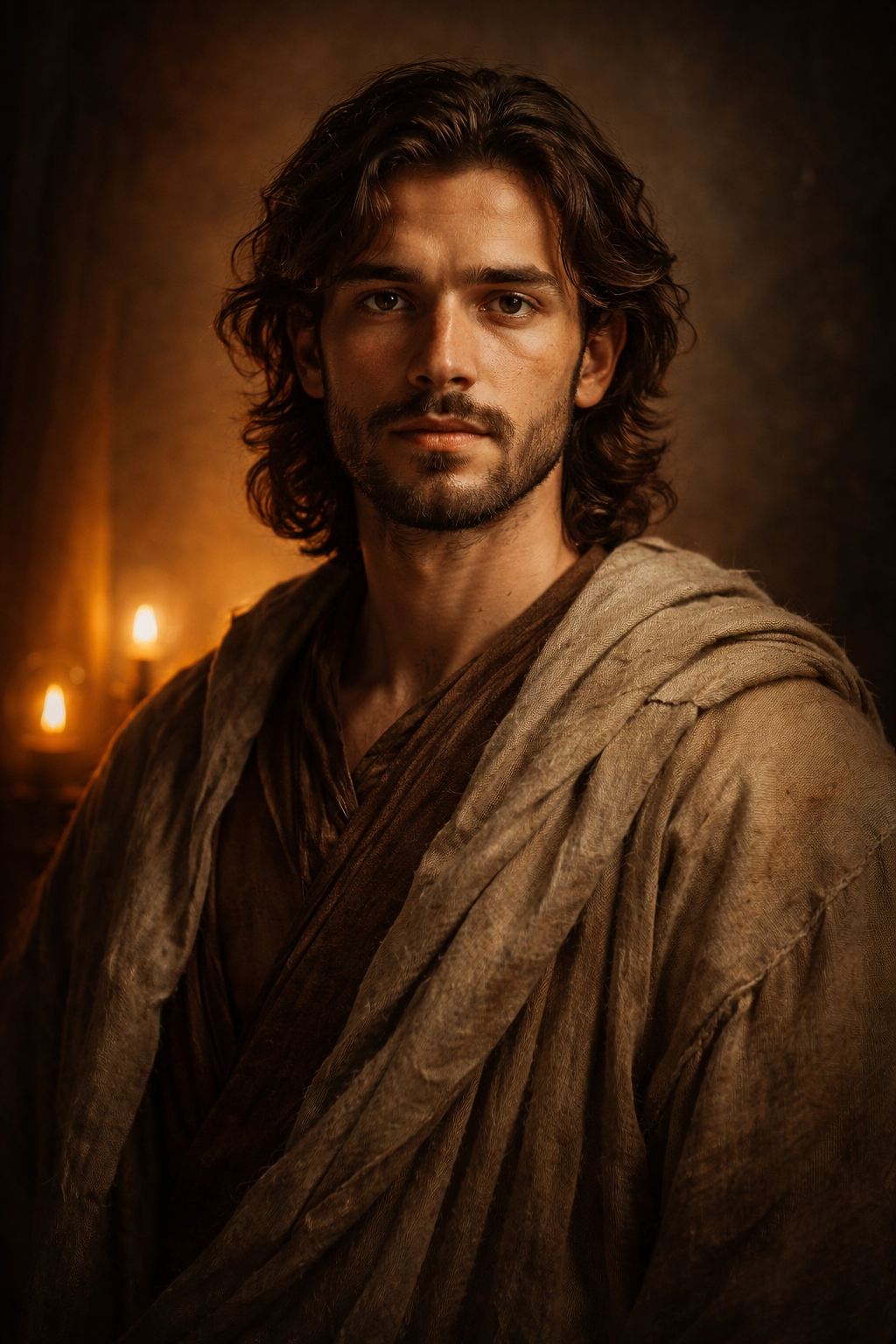
Sael: Birthed from his father and his father's mother, then transformed into moral authority.
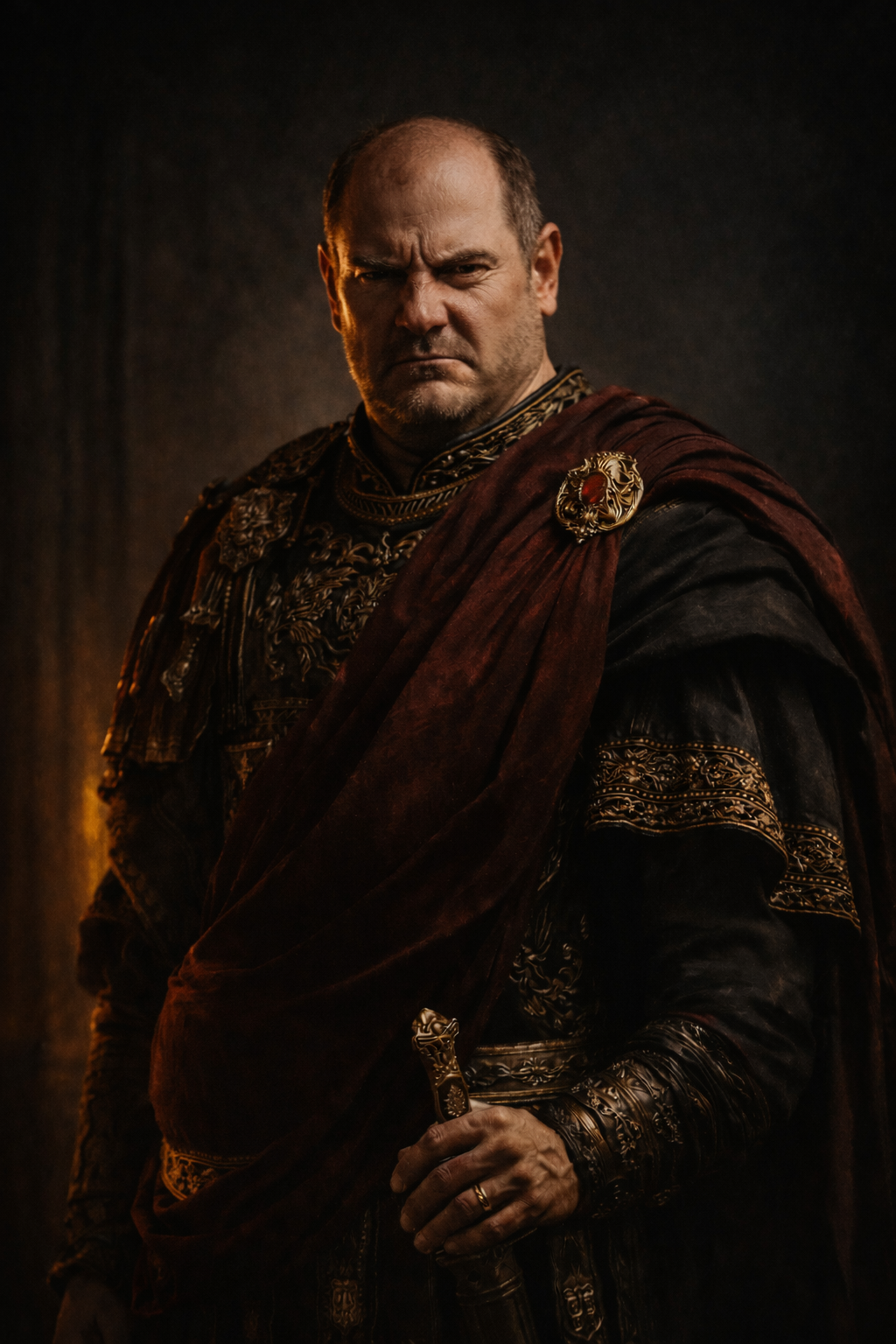
Cassian: Political cruelty collapsing under its own hubris.
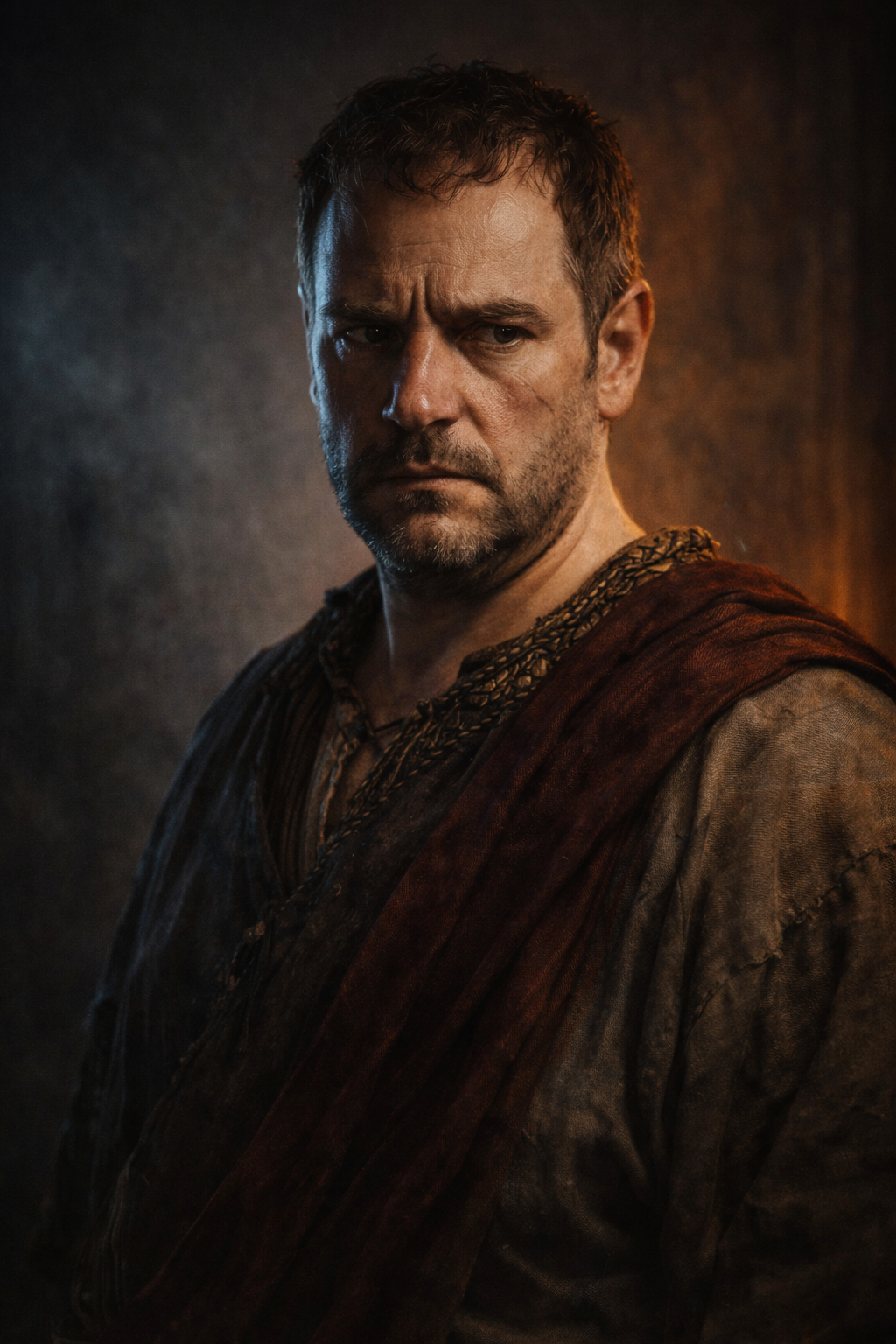
Maro: Envy to confession to redemption.
Cult Leaders: Ethical stewards in a hostile regime.
Power hides behind secrecy: the empire's first weapon is not force, but control over who is
allowed to know the truth of Sael's conception.
(script outline, scene 2)
Life refuses the logic of corruption: Sael's beauty and vitality make the crime that made
him look smaller than the life that answers it.
Public cruelty reveals public conscience: the crowd is taught to see Sael as a stain, yet
his death exposes that even a corrupted society still knows it is condemning innocence.
Empire rewrites what it cannot justify: institutions sanitize origin while dissident memory
preserves moral truth. (screenplay, blueprint notes)
Forgiveness is the counter-power: mercy functions as active resistance, not passivity, and
humiliates domination by refusing its terms.
(scene 10, screenplay)
Confession breaks the machine: Maro's confession transforms private guilt into public
consequence. (scene 3, scene 7)
The trilogy escalates one human lesson: survival (Atuun) -> morality (Sael) -> coexistence
(Neurion). (prequel summary, sequel summary)
Pitch
Decision-ready framing for two buyers: editorial acquisition and screen development.
Literary Package
Book
Prestige historical-moral fiction with book-club weight and adaptation runway.
Lane: literary historical fiction with moral-political stakes
Status: outline, screenplay draft, and trilogy architecture complete
Ask: commission full manuscript treatment
Screen Package
Screen
Character-led period drama built around public spectacle and awards-weight roles.
Lane: prestige period drama with political-moral charge
Format: feature first, expandable to limited series
Ask: option and treatment-to-script development
Publishing Opportunity
Book
Commercial-literary property with built-in trilogy runway.
Positioning: conversation-driving moral epic with adaptation upside
IP value: mapped cross-era expansion already in place
Next: polished prose treatment for submission
Production Opportunity
Screen
Development-ready period project with clear conflict engine and crowd-scale set pieces.
Budget: mid-to-upper period drama with scalable spectacle
Format: feature with limited-series upside
Next: attach producer/director for lookbook and finance package
Adaptation
Novel Adaptation Angle
The internal conflict of Sael, Maro, and Cassian supports rich literary treatment: guilt,
conscience, and ideology unfold through interior narrative and philosophical dialogue.
Best fit: prestige historical novel with moral and political depth.
Film Adaptation Angle
The project already carries cinematic DNA: strong visual motifs (torchlight, crowns, processions,
council halls), escalating acts, and crowd-driven public set pieces ending in legacy.
Best fit: mid-to-large scale period drama with awards potential.